BlackLine Review in 2026: Is the Tool Worth It for Your Team?

.png)
If your month-end close is creeping later every quarter, you have probably started looking for software to take the manual work off your team's plate. As your business adds entities, transactions, and audit scrutiny, reconciliations and close tasks multiply, and the spreadsheets that used to hold everything together start to crack.
So you start evaluating platforms, and BlackLine shows up. It is one of the most recognized names in financial close management, promising to streamline the close and reduce errors and inefficiencies. But is it the right fit for your team?
In this BlackLine review, you will get a clear-eyed look at what the platform is, what it does in 2026, what customers say about it, what it costs, and how long it takes to implement. At the end, you will see who BlackLine serves best, who tends to outgrow it or never grow into it, and the top alternatives worth weighing.
Key Takeaways
- What it is: BlackLine is an enterprise financial close and reconciliation platform, now built around its Studio360 data platform and Verity AI layer.
- Who it fits: Large, multi-entity organizations with dedicated finance-systems admins and the budget for a multi-month rollout.
- What it costs: No public pricing. Contracts average roughly $77,000 per year and range from about $17,500 to $340,000, with implementation and services adding $5,000 to $50,000 or more.
- The honest catch: Mid-market teams frequently report a 22- to 25-month ROI payback and a steep learning curve that needs an in-house admin to justify.
- The decision rule: If you are under roughly $250 million in revenue, run fewer than 10 entities, or do not need enterprise-grade SOX tooling, there are alternatives to BlackLine you can use.
What Blackline Is
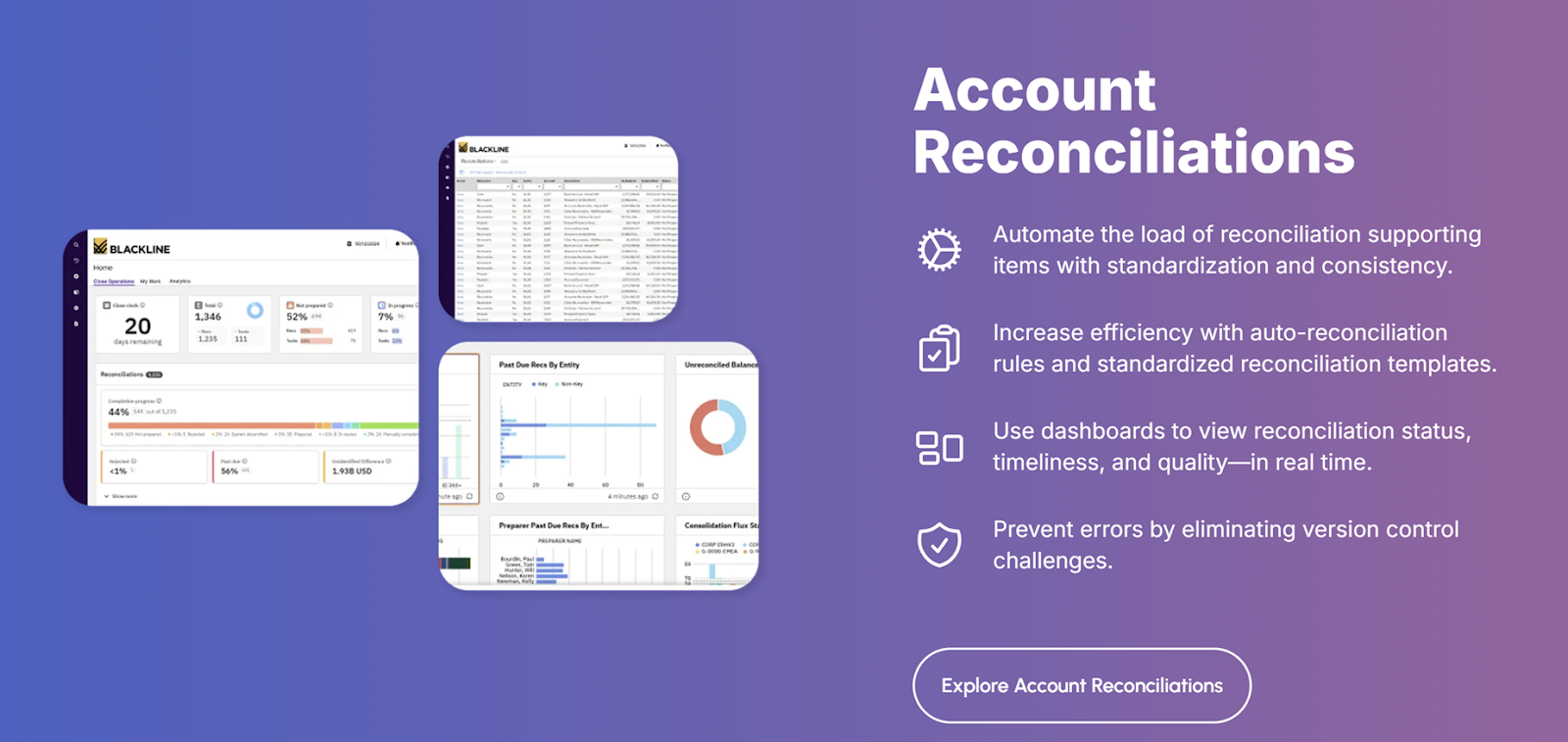
BlackLine is a cloud-based platform built to automate and control the financial close. As financial close software, it centralizes close-adjacent work that usually lives in spreadsheets, including account reconciliations, transaction matching, journal entries, intercompany accounting, and consolidation.
The platform sits alongside your ERP, picking up the record-to-report work that your general ledger leaves to manual effort.
Its core capabilities include:
- Account Reconciliation: Automates BlackLine account reconciliation by matching balances across sources, flagging discrepancies, and routing exceptions for review, so you spend time on the outliers instead of the whole population.
- Financial Close Management: Organizes close tasks, owners, and deadlines with status tracking and a clear audit trail.
- Transaction Matching: Handles high-volume matching across bank statements, intercompany activity, and subledger accounts.
- Journal Entries: Creates, validates, routes, and posts journals directly to the ERP, with supporting documentation attached.
- Intercompany Accounting and Consolidation: Manages transactions and reconciliations across subsidiaries, currencies, and entities.
- Compliance and Controls: Bakes in controls, certifications, and documentation built to satisfy auditors.
What BlackLine Does in 2026
The version of BlackLine you're evaluating today isn't the one your peers described a few years ago. In April 2026, BlackLine launched what it calls Agentic Financial Operations, a new operating model built on two pieces worth understanding:
- Studio360: A data and workflow layer that unifies information from your ERP, BlackLine modules, and third-party sources, with newer connectors for systems like Snowflake and Workday
- Verity: BlackLine's embedded AI layer, which introduces agentic "digital workers" for tasks like preparing reconciliations, matching transactions, and managing collections.
BlackLine is no longer a purely "legacy, no-AI" option, so weigh it on how its automation and AI fit your team, not on whether it has any. At its core, BlackLine is built for enterprises that need deep automation, tight controls, and audit readiness across complex structures.
How BlackLine Works
BlackLine sits on top of your ERP and centralizes the close in one place. As accounting automation software, it automates routine work, including reconciliations, matching, and journal posting, with minimal manual intervention.
Dashboards give you real-time visibility into where the close is stuck and where accuracy is at risk, and role-based cloud access lets distributed teams work from anywhere.
The trade-off is configuration. BlackLine is powerful because it is highly configurable, and it is demanding for the same reason.
Compare BlackLine with Numeric's reconciliation product
.png)
BlackLine Pros and Cons
When deciding whether this is the right platform for your team, it's a good idea to review the advantages and disadvantages highlighted in BlackLine reviews.
What Users Say
One of the best ways to judge a tool is to read what current customers report. BlackLine is widely and well reviewed, which is itself a signal of its entrenched position in enterprise finance.
- G2: about 4.5 out of 5 across roughly 1,088 verified reviews.
- Gartner Peer Insights: about 4.5 out of 5.
- TrustRadius: about 8.6 out of 10.
- Capterra: about 4.3 out of 5 across 19 reviews.
What customers praise: Reviewers most often credit BlackLine for automating time-consuming reconciliations and journal entries, thereby shortening the close cycle and improving accuracy, transparency, and control throughout the process.
Where customers push back: A steep learning curve and heavy onboarding, dependence on implementation partners whose expertise varies, limited dashboard customization, and a UI that some long-time users find dated and click-heavy. Several note that without a dedicated systems person, much of the platform's value stays out of reach.
In short, customers love what BlackLine does once it is running, and they are candid about how much effort it takes to get there.
BlackLine Pricing and Implementation
BlackLine does not publish pricing, and your quote will depend on your user count, the modules you select, the ERP connectors you need, and your organization's size. Because the model is module-based, most buyers end up bundling several products, which is where costs climb.
Based on third-party data (via Vendr, the same source cited in our full BlackLine pricing breakdown):
- Average: Roughly $77,000 per year.
- Range: About $17,500 to $340,000 per year, depending on org size and modules.
- On top of subscription: Implementation and professional services typically add $5,000 to $50,000 or more.
- Payback: Mid-market teams frequently report an ROI timeline of 22 to 25 months.
A few practical notes for your evaluation:
- Build in implementation reality. Plan for a multi-month rollout and the internal time that comes with it.
- Ask about ongoing support fees. Enterprise agreements commonly include a premium support tier in addition to the license.
- Use volume as leverage. Higher reconciliation volumes can unlock meaningful negotiated discounts.
- Bring a real alternative. Credible competition in your evaluation tends to sharpen the conversation.
Who BlackLine Is Best For
BlackLine is a strong fit when you have:
- Multi-Entity, Global Consolidation on Enterprise ERPs: You run complex ownership structures, international subsidiaries, and multi-currency operations on systems like SAP, Oracle Fusion, or Workday.
- Heavy-Volume Transaction Matching: You reconcile large datasets across bank statements, intercompany activity, and subledgers, and you have an admin who can configure rules as the business changes.
- ERP-Diverse Environments: You work across multiple ERP systems and need a centralized automation and reporting layer on top.
- Mature Teams with Dedicated Resources: You can commit to a multi-month implementation and the ongoing capacity to manage and configure the platform.
If that describes you, typically a large or public company with complex structures and the resources to match, BlackLine is a credible, capable choice. If not, the next section is for you.
Who Should Look Elsewhere, and the Best Alternatives
If your team is leaner, your close is growing faster than your headcount, and the idea of a six-month implementation makes you wince, BlackLine is likely more platform than you need. The good news is that you have strong BlackLine alternatives built for exactly that situation.
Numeric: Best Alternative to BlackLine
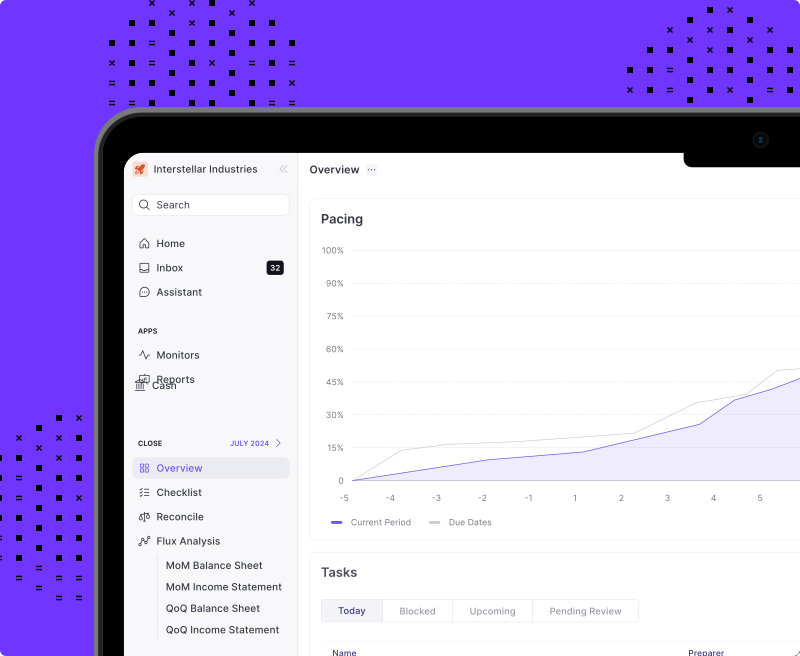
Numeric is an AI-native close automation platform built for complex accounting teams, with particular strength for NetSuite teams. Where BlackLine asks you to grow into an enterprise rollout, Numeric is built to get you to a faster, cleaner close quickly.
You get reconciliations that pull your trial balance and supporting sources in real time, a close checklist that centralizes tasks, owners, and supporting docs in one place, flux analysis with AI-drafted variance explanations, and transaction monitors that flag errors and policy exceptions before they surface at review.
Cash reconciliations are automated at 90% or higher through Numeric's Cash Management module, which connects directly to your bank accounts and handles the matching, journal entry creation, and posting that most teams still do by hand. And for the technical accounting questions that come up mid-close, Numeric's AI is trained on accounting standards and Big 4 publications — so your team gets a fast, reliable first draft rather than a blank page.
For teams that prefer to work from their own AI tools, Numeric's MCP lets you query close data and run accounting workflows directly from the AI client your team already uses.
Watch Numeric's Co-founder and CPO Anthony Alvernaz walk through how accounting teams are using MCP to orchestrate their close.
FloQast
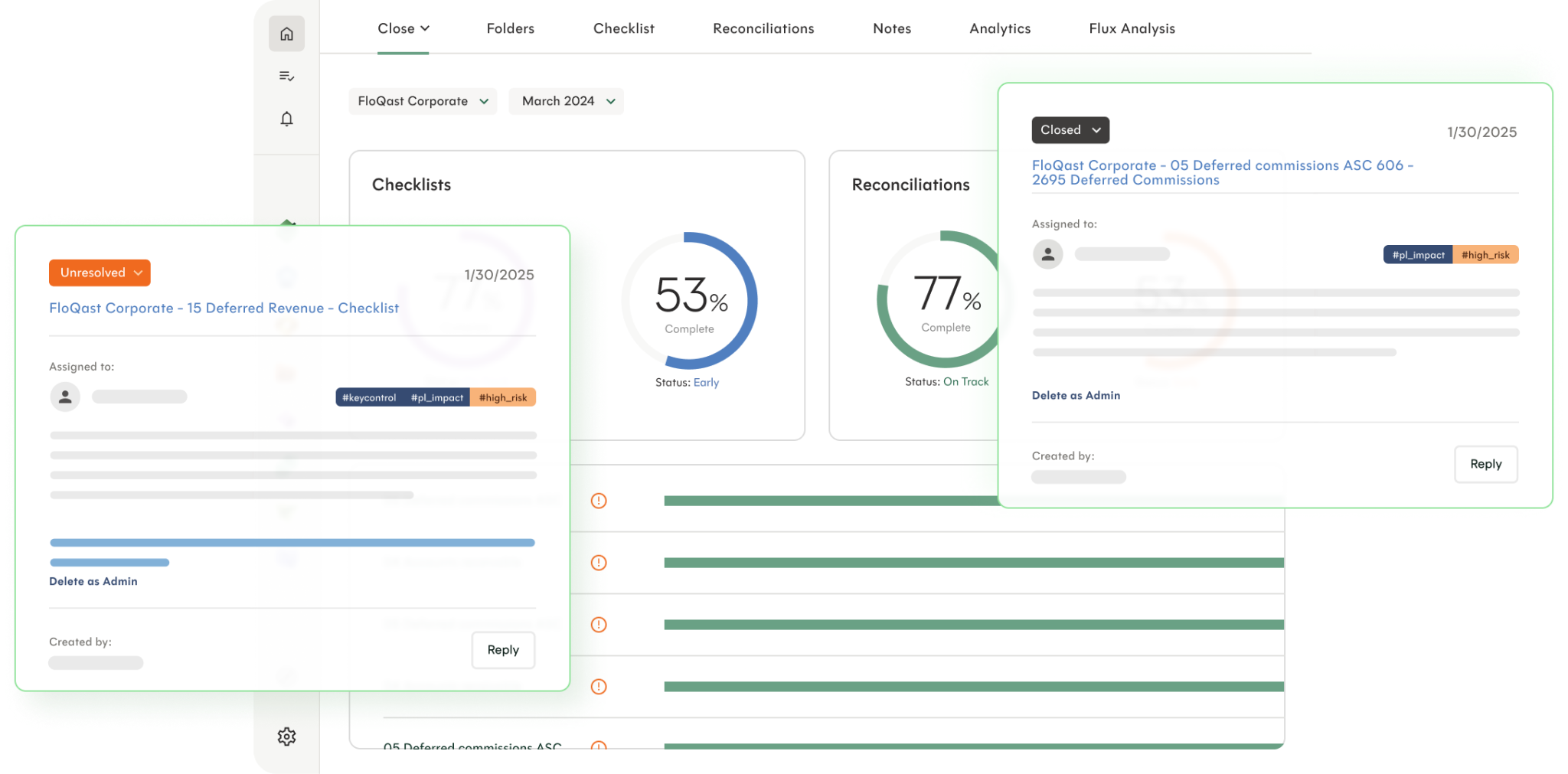
FloQast is a close management platform that helps teams close faster through checklists, collaboration, and team accountability. Compared with BlackLine, FloQast is generally a better fit for mid-market teams that want process oversight and a familiar, spreadsheet-style workflow without enterprise-scale complexity.
Adra by Trintech

Adra, part of Trintech, offers a modular suite that includes Adra Matcher for reconciliations. Compared with BlackLine, Adra gives mid-sized companies a more streamlined, modular path to automating the close without committing to a full enterprise system.
Feature Comparison Table
Why Teams Are Choosing Numeric
What wins teams is what changes once Numeric is running: the close stops being a fire drill. Real-time reconciliations automatically match the bulk of activity, so your team reviews the handful of exceptions instead of the whole population, and the hours that used to disappear into manual ticking and chasing balances go toward analysis instead.
Customers who've evaluated both platforms put it plainly:
"By far, Numeric has the best service that I've ever seen in a similar platform"
— Sandy Yang, Head of Accounting at Plaid.
The results show up in the numbers. Brex cut its time to close from six days to four and now automates more than 95 percent of cash reconciliations across 100-plus accounts.
Awardco increased close efficiency by 33 percent, and GOAT built a PwC audit-ready close in which the audit trail carries forward from period to period rather than being rebuilt under the deadline.
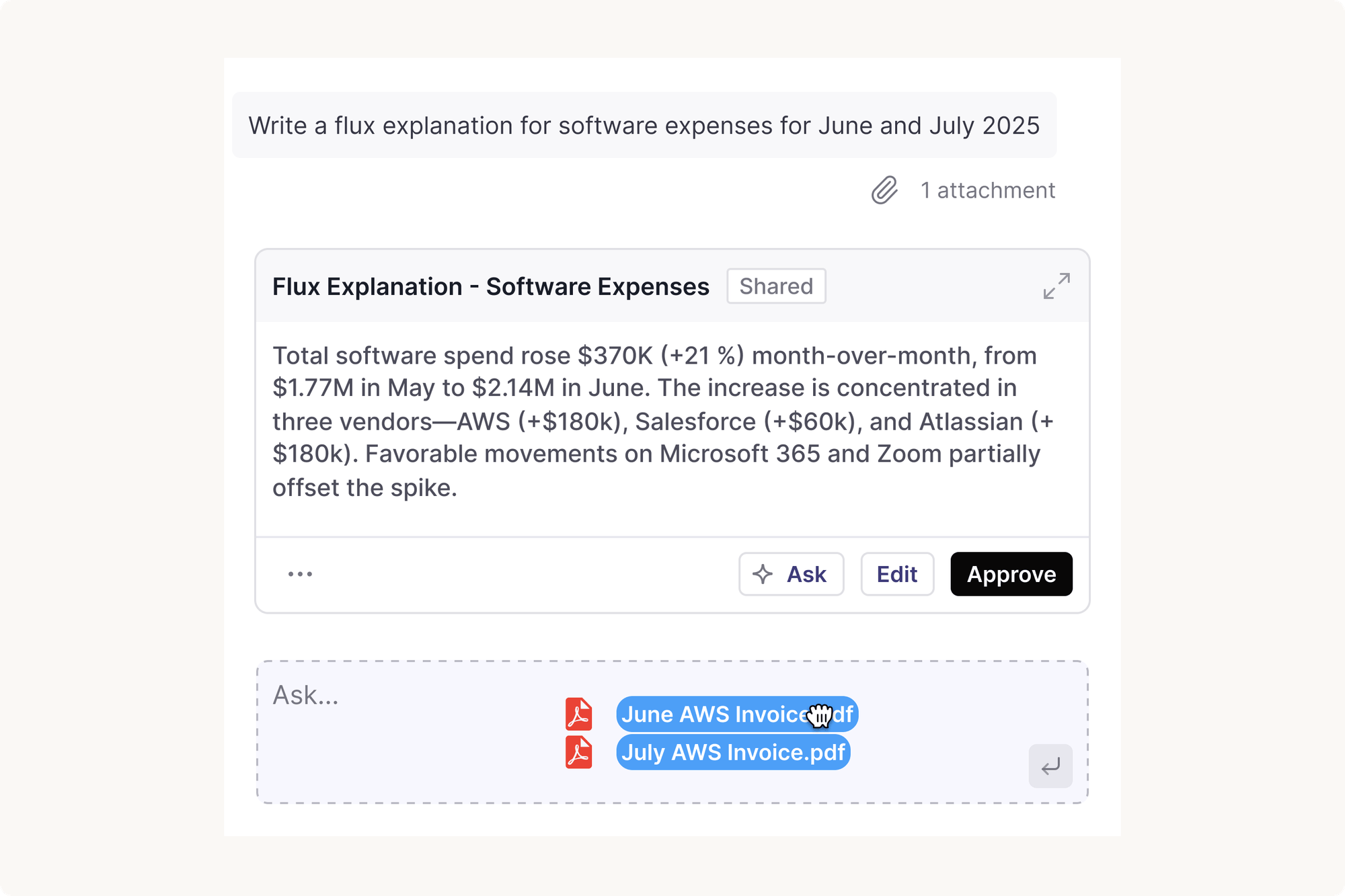
The deeper payoff is what your senior accountants do with the time back. Instead of maintaining the tool, they run the close, lead the team, return to flux analysis that informs the business, and answer CFO and FP&A asks on the spot instead of running back to recheck numbers.
BlackLine Review: Decide Based on Your Organization Size and Structure
The financial environment rewards tools that simplify the close while protecting accuracy and compliance.
This BlackLine review shows a platform that can be a good choice for large enterprises with comprehensive automation needs, a dedicated admin, and the budget to match. For smaller and scaling teams, though, BlackLine often proves overpowering rather than empowering.
If you are a mid-sized or scaling team, especially on NetSuite, Numeric offers an intuitive, AI-native, and more affordable path to the same goal: managing complexity, closing faster, and staying audit-ready. Schedule a personalized demo to see how it fits your team.
FAQs
Related Content
.png)
What Is Multidimensional Accounting? Benefits, Examples, and 3 Steps to Set It Up
Learn how multidimensional accounting tags transactions by department, product, and customer, with examples and 3 steps to set it up.
.png)
ERP vs Data Warehouse: Where Should Financial Data Live?
Understand ERP vs data warehouse, where financial detail and accounting authority live, and how Numeric's FDP brings them into one system of record.
.png)
NetSuite Reporting Limitations: Why Native Reports Break Down As You Scale
NetSuite reporting limitations come from how the general ledger stores data. See why row limits and manual board packs happen and what fixes them.