NetSuite vs. Sage Intacct: Which Fits Your Finance Team?


NetSuite puts accounting and operations in one system across subsidiaries. Sage Intacct focuses on core financials, with dimensional reporting and multi-entity consolidation that finance teams can manage without a dedicated admin.
Both are strong systems, and the right choice depends on multi-entity needs, revenue complexity, reporting flexibility, and total cost. This NetSuite vs. Sage Intacct comparison covers each of those, along with where Numeric's Financial Data Platform fits as a third option for teams whose complexity has outgrown the traditional ERP model.
Key Takeaways
- NetSuite fits companies that want accounting and operations in one system across many subsidiaries, with native modules for inventory, order management, CRM, and revenue recognition.
- Sage Intacct fits finance-led teams that prioritize core accounting, dimensional reporting, and multi-entity consolidation without a broader ERP footprint.
- Both systems record activity as journal entries against a chart of accounts, so the same close work follows a team into either one.
- Both price by quote, and total cost depends on modules, users, and implementation, which runs about 3 to 6 months for Sage Intacct and 4 to 9 months for NetSuite.
- Numeric's ERP replacement, the Financial Data Platform, is a third option built for the same complexity both systems are chosen for, often at the same cost or less than an ERP plus the tools layered around it.
NetSuite vs. Sage Intacct at a Glance
Both are cloud ERPs built for mid-market finance teams, with NetSuite going wider across operations and Sage Intacct going deeper on core financials.
| Feature | NetSuite | Sage Intacct |
|---|---|---|
Best fit | Companies that want accounting and operations (inventory, order management, CRM) in one system across subsidiaries | Finance-led companies focused on core accounting, dimensions, and multi-entity without the broader ERP footprint |
Multi-entity and consolidation | OneWorld runs all subsidiaries in a single database with automated consolidation and currency translation | Multi-entity accounting with consolidation across entities, including intercompany eliminations |
Intercompany | Automated intercompany transactions and elimination entries across subsidiaries | Intercompany transactions supported with elimination capabilities |
Dimensions and segments | Custom segments and classifications added to transactions for reporting | 14 standard dimensions (Location, Department, Class, Customer, Vendor, Employee, Item, Project, and more) plus user-defined dimensions with custom business logic |
Revenue recognition | Advanced Revenue Management module (ASC 606 / IFRS 15) as an add-on | Contract and revenue management module for subscription and usage models |
Operational modules | Native inventory, order management, CRM, project management, and procurement | Order Entry, Purchasing, and Inventory Control modules available, though operations-heavy companies often find NetSuite's scope broader |
Reporting | Report Builder, saved searches, and SuiteAnalytics with custom segments | Financial reporting built around dimensions, with the ability to pivot and filter by any tagged dimension |
Implementation time | 4 to 9 months (ERP Research) | 3 to 6 months (ERP Research) |
Pricing model | Annual licence, per-user fees, add-on modules, and implementation partner | Core financials subscription, add-on modules, user licences, and implementation partner or reseller |
Integrations and ecosystem | SuiteApp marketplace and SuiteScript customization for extending the platform | Marketplace integrations including Salesforce, plus API access for custom connections |
Support model | Tiered support plans, commonly sold and implemented through partners | Commonly sold and implemented through resellers, with support depending on the partner and Sage's plan |
Day-to-day admin | Typically requires a NetSuite admin or consultant for configuration and customization | Finance teams often manage the system with less IT involvement, though dimensions and reports need maintenance as the business changes |
Looking to see how NetSuite measures up against other options? Take a look at our NetSuite vs. QuickBooks comparison.
What to Know About NetSuite
NetSuite is the choice when a company needs accounting and operations in one system, across subsidiaries, managed from a single database.
One System Across Subsidiaries and Operations
NetSuite OneWorld puts every subsidiary in one instance. Currency translation, intercompany transactions, and consolidated reporting all happen inside the platform without exporting data or maintaining separate workbooks. For companies with inventory, fulfillment, or services delivery, NetSuite's operational modules (inventory management, order management, CRM, project management) run alongside the financials rather than through third-party integrations.
That breadth is NetSuite's core advantage. A manufacturing company shipping internationally, a services firm tracking project profitability across regions, or a group managing shared inventory all benefit from having operations and accounting in the same system.
Segments, Modules, and Customization
NetSuite uses custom segments and classifications to tag transactions for reporting. Revenue recognition comes through the Advanced Revenue Management module (ASC 606 / IFRS 15), and advanced financials, budgeting, and planning each come as add-on modules with additional licensing fees.
SuiteScript and the SuiteApp marketplace let teams extend the platform. That flexibility is real, but it comes with trade-offs. Most customization requires either a NetSuite admin on staff or an outside consultant, and every customization adds a line to the admin workload.
What NetSuite Costs to Run
NetSuite's pricing starts with a base fee, and the full bill has four parts.
- Annual licence for the base platform
- Per-user fees that scale with headcount
- Add-on modules for revenue recognition, advanced financials, planning, and other capabilities
- Implementation partner fees for initial setup and often for ongoing support
Most companies also add point solutions around NetSuite for reporting, reconciliation, or automation that the base platform doesn't cover.
What to Know About Sage Intacct
Sage Intacct is built for finance teams that want strong core accounting, dimensional reporting, and multi-entity capabilities without taking on the operational breadth (and admin overhead) of a full ERP.
Finance-First Core Accounting
Sage Intacct's focus is the GL and the work that surrounds it. Finance teams often manage the system themselves, without a dedicated admin or heavy IT involvement for day-to-day configuration. Sage describes Intacct as "the AICPA's only preferred provider of financial applications."
Dimensions and Multi-Entity Accounting
Dimensions are the primary reason many finance teams choose Sage Intacct. Sage's documentation lists 14 standard dimensions out of the box, including Location, Department, Class, Customer, Vendor, Employee, Item, and Project. Teams can also create user-defined dimensions with custom business logic to match how the business actually operates (examples include Line of Business and Facility).
Multi-entity accounting lets teams consolidate across entities with intercompany eliminations, without maintaining separate instances. For many finance-led companies, this combination of rich dimensional tagging and multi-entity support makes Sage Intacct the better fit compared to NetSuite's segment-based approach.
At scale, dimensions run into limitations (hundreds of dimension values, reclassification when the reporting structure changes, write-time locks on historical data).
Operations and Revenue Modules
Sage Intacct offers Order Entry, Purchasing, and Inventory Control modules for companies that need basic operational capabilities. Order Entry handles the sales process from quote through invoicing, with customizable workflows and pricing schedules. CRM comes through integrations like Salesforce rather than a native module.
For subscription and usage-based revenue, Sage Intacct's contract and revenue management module handles recognition schedules and contract modifications. Operations-heavy companies with complex inventory, fulfillment, or manufacturing needs often find NetSuite's operational scope broader.
What Sage Intacct Costs to Run
Sage Intacct's bill is layered the same way.
- Core financials subscription for the base accounting platform
- Add-on modules for Order Entry, Purchasing, Inventory Control, contract and revenue management, and other capabilities
- User licences that scale with the team
- Implementation partner or reseller fees for setup and ongoing support
Sage does not publish list pricing, and the total depends heavily on which modules the team needs and how many entities it manages. The admin time to maintain dimensions, reports, and integrations as the business changes is an ongoing cost worth factoring into the evaluation.
How NetSuite and Sage Intacct Compare on the Close
Four areas decide how long the close takes, and each system handles them a little differently.
Multi-Entity Consolidation and Intercompany
NetSuite OneWorld consolidates all subsidiaries from a single database, with automated intercompany elimination entries and currency translation. Sage Intacct's multi-entity accounting consolidates across entities with intercompany capabilities.
In both systems, the team still maps entities to a consolidated chart of accounts, reviews and matches intercompany transactions, validates currency translation rates, and ties the consolidated numbers back to each entity's ledger. The mechanics differ, but the close work is similar.
Dimensions, Segments, and Changing the Reporting Structure
Both systems tag dimensions or segments onto journal entries when they post. While a period is open, those tags can still be edited, but once it closes, changing them means posting adjusting or reclass entries.
When leadership reorganizes by product line instead of region, or the company adds a business unit that doesn't fit existing categories, historical data doesn't move with the new structure in either system. The team either remaps history in a workbook or runs a reclassification project to repost entries with updated tags. This happens regardless of whether the team chose NetSuite's custom segments or Sage Intacct's dimensions.
Revenue Recognition
NetSuite's Advanced Revenue Management module and Sage Intacct's contract and revenue management module both handle ASC 606 and subscription models. In either system, when a contract changes mid-term with a pricing amendment or an early termination, the team decides how the change is accounted for, updates the recognition schedule, posts any catch-up adjustment, and reconciles the billing data back to the GL.
For SaaS and usage-based businesses with frequent contract modifications, the question is how much of that work the module automates versus how much still lands on the team as manual entries and workbook maintenance.
Implementation Timeline and Admin
ERP Research's independent comparison puts Sage Intacct at 3 to 6 months and NetSuite at 4 to 9 months for implementation. More entities, more modules, and more historical data to migrate push both toward the longer end.
After go-live, NetSuite usually requires a dedicated admin or consultant for ongoing configuration and customization. Sage Intacct often runs with less IT overhead, though managing dimensions, maintaining reports, and configuring integrations still take ongoing effort from the finance team.
What Stays the Same Whichever You Choose
NetSuite and Sage Intacct share the same underlying model. Activity goes into the system as journal entries posted against a chart of accounts. Dimensions or segments are tagged at the moment the entry is written, and the contract, usage event, or business reason behind a number lives in another system.
Whichever system a team picks, the same close work comes back every month.
- Pull billing data into a workbook to build the revenue recognition schedule, because the contract details and the accounting live in separate places.
- Rebuild the view leadership asked for when a new reporting cut doesn't match the dimensions or segments that were set up at implementation.
- Tie every consolidated number back to the GL to make sure eliminations, translations, and adjustments all reconcile.
- Pull together documentation when the auditor asks how a number was produced, tracing from the report back through the workbook to the source system.
Ben Sheridan, product manager for Numeric's Financial Data Platform, who previously worked in revenue accounting and operations at Snowflake, sees that shared model as the reason the same work keeps coming back.
"[The Financial Data Platform] is itself a core accounting system, and so it would be a replacement for ERP and GL products... a lot of gaps live today center around the data foundation reporting issues, and structuring accounting to reflect those realities versus using an ERP or a GL as kind of like a collecting ground for journal entries."
Which one fits depends on whether the company needs broad operational modules or a finance-first system with strong dimensional reporting. A third option is also worth weighing.
Read the thesis behind Numeric's Financial Data Platform. Architecture for Agentic Accounting lays out how data-centric accounting works, from the contract to the report.

Numeric's ERP Replacement as a Third Option
Numeric's ERP replacement, the Financial Data Platform, is a third path for teams weighing the traditional ERP models of NetSuite and Sage Intacct. It runs on data-centric accounting, keeping every business event (the contract, the invoice, the usage event) as an object and deriving the accounting from it.
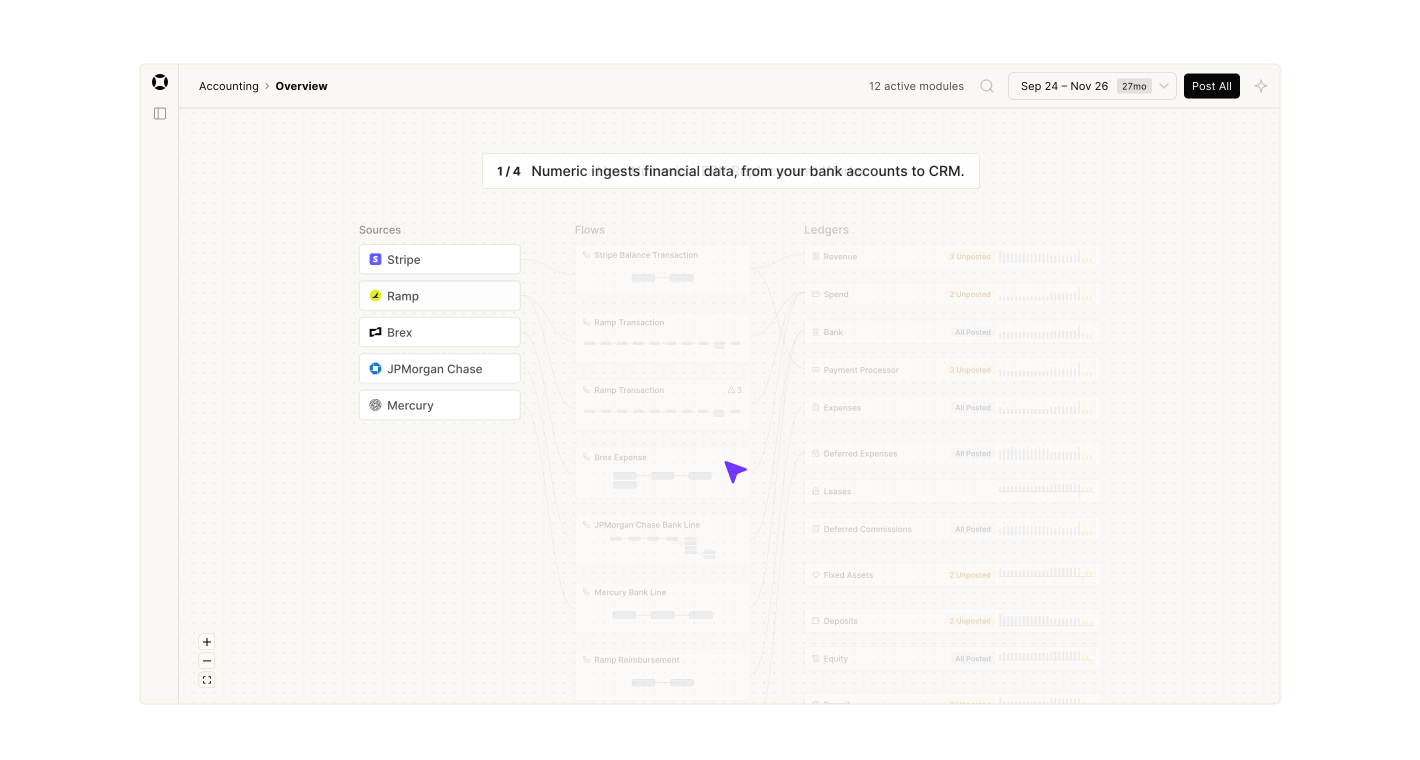
For the accounting team, the monthly work changes in four places.
- New reporting cuts reach back through history. When leadership asks for a new reporting cut, the team builds it from the contract, customer, and product details the platform keeps behind each number, so last year's figures move with the new structure without a reclassification project.
- Billing and revenue run from the same contract. When a customer upgrades mid-term, the team updates the contract once, and both the invoice and the revenue schedule come from that change, so deferred revenue and unbilled balances already tie to what was billed.
- Group reporting carries the same detail as entity reporting. Leadership can cut consolidated numbers by customer, product, or contract across every entity, the same way the team reports on a single one.
- Every number traces back to the business event behind it. The financial data graph keeps each transaction connected to the contract, invoice, or usage event that produced it, so when an auditor asks how a number was produced, the answer is already in the platform.
Numeric also connects to AI assistants like Claude through the Numeric MCP, and teams can build small internal apps on the same data with App Studio. The platform tends to benefit SaaS, fintech, and usage-based revenue businesses most, where contract changes, metered billing, and multi-element arrangements create the most accounting complexity.
Cost Compared with an ERP Plus Add-Ons
The Financial Data Platform often costs about the same or less than NetSuite plus the point solutions teams add around it (reporting platforms, revenue recognition tools, consolidation software), with more functionality included in a single platform.
What Built Achieved After Moving to the Financial Data Platform
Built moved from NetSuite to the Financial Data Platform, freed up 2 FTEs worth of bandwidth from billing and revenue work, and delivers invoices 4 business days earlier.
Asia McKnight, Controller at Built, described what changed once the admin burden dropped.
"It was a system that was really flexible enough for us to scale as a business, but also our current team is able to configure the system in a way where we don't need a system administrator to understand how the system works and to maintain the current team size to support our growing operations."
Moving Without a Single Cutover
The move can happen in stages. A team can start on Close Management, Cash Management, or Billing and Revenue, and bring the rest of its financial data onto the Financial Data Platform once the case is clear. Teams still posting to NetSuite can also run the platform alongside it during the move.
Numeric's team works hands-on with the accounting team through each phase of the move, so instead of coordinating between a vendor and a separate implementation partner, your team works with Numeric directly.
The Bottom Line
The NetSuite vs. Sage Intacct decision comes down to what the company needs beyond core accounting. NetSuite makes sense when operations, inventory, and CRM belong in the same system as the GL. Sage Intacct makes sense when the finance team wants strong dimensional reporting and multi-entity accounting without the broader ERP overhead.
Both are capable systems, and each handles the basics well. Both also record activity as journal entries, so some of the same close work carries over whichever one the team picks.
Teams whose complexity centers on consolidation, revenue, and reporting flexibility should also consider whether a traditional ERP model is the right architecture at all. If not, Numeric's ERP replacement, the Financial Data Platform, is built for exactly that complexity.
If your team is considering choosing an ERP, ask about Numeric's ERP replacement.
Frequently Asked Questions About NetSuite vs. Sage Intacct
Related Content
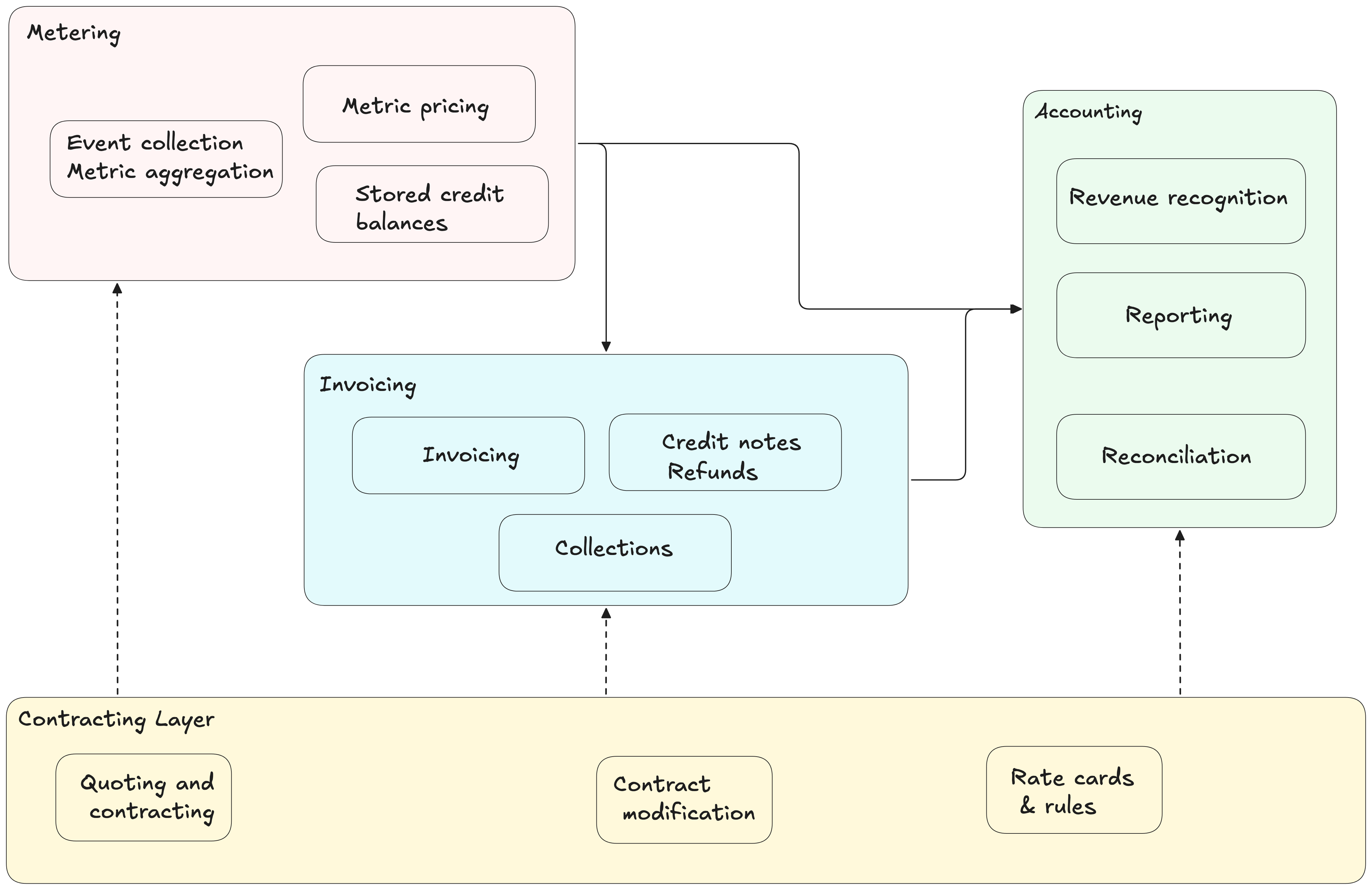
AI companies should own their metering, not the entire billing stack
Andrew Bihl, Numeric's CTO, explains why AI companies should build metering in-house and buy invoicing and revenue recognition, with one shared contract model connecting the two.

NetSuite Alternatives: 10 Options for Finance Teams in 2026
Compare 10 NetSuite alternatives by fit, cost, and implementation, and see how Numeric's ERP replacement consolidates your ERP and point solutions.
NetSuite vs. Sage Intacct: Which Fits Your Finance Team?
Compare NetSuite vs Sage Intacct on multi-entity, dimensions, revenue, reporting, and cost, and see where Numeric's ERP replacement fits for complex teams.