Best AI Accounting Tools for Finance Teams (2026)

.webp)
Do you need an AI refrigerator or toothbrush? No, but that hasn't stopped companies from making them.
The AI craze has pushed a wave of rebranding into every corner of software, and SaaS is the worst offender: nearly every tool of note has bolted on an "AI feature" or repainted its homepage to look AI-native, even when nothing has been changed. For an accounting team evaluating its stack, that makes the real question hard to answer: Will any of this make a difference to your close, or is it just a new label on the same workflow?
To save you the analysis paralysis, we've pulled together the AI accounting tools that earn their place in a modern finance stack — in reconciliations, flux, reporting, accounts payable, revenue recognition, and sales tax.
Key Takeaways
- Numeric: Best for teams that want to cut down the month-end close — AI-drafted flux, instant reconciliations, CFO-ready reporting, and Numeric Intelligence that optimize the close itself.
- ChatGPT and Claude: Best general-purpose assistants for drafting memos and policies, quick calculations, and summarizing long documents.
- BILL, Ramp, and Brex: Best for automating accounts payable and spend management, from invoice capture to GL coding to policy enforcement.
- Vic.ai: Best for autonomous, high-volume AP automation — overkill below roughly 1,000 invoices a month, but the most credible "no-touch" AP pick above it.
- Tabs: Best for AI-driven revenue recognition — turning signed contracts into ASC 606-compliant schedules automatically.
- Trullion: Best for AI-driven lease accounting, revenue recognition, and audit-ready data extraction.
- Anrok: Best for AI-native global sales tax compliance — nexus monitoring, calculation, filing, and reconciliation in one platform.
Before Any AI Accounting Tool: Clean Your Data
A tool only works as well as the data you feed it. Your AI software, however capable, sits on top of the financial data in your ERP, your workpapers, and everywhere else, and it inherits every gap in that foundation.
Great teams build great systems, but those systems are only as good as the data underneath them. If you want a real return from your tech stack, do the unglamorous work of cleaning and maintaining that data first.
The same holds downstream: clean books are what make your FP&A tools, forecasts, and reporting trustworthy. Software scales good data. It does not rescue bad data.
What Counts as an "AI Accounting Tool?"
"AI accounting tool" is a broad phrase, so it helps to break it into the categories that map to how you work:
- AI for the close and reconciliation: Pulls the trial balance and supporting sources, flags what doesn't tie out, and points you to the exact transaction driving a difference.
- AI for flux and reporting commentary: Drafts variance explanations and reporting narratives from the underlying transactions, so you edit instead of writing from scratch.
- AI for accounts payable and spend: Captures invoices, suggests GL coding, routes approvals, and enforces policy automatically.
- AI for revenue recognition: Reads contracts and turns them into structured, ASC 606-compliant revenue schedules with an audit trail.
- AI for sales tax compliance: Monitors nexus, calculates tax, and handles registration and filing across jurisdictions automatically.
- General-purpose assistants: Flexible tools for drafting, summarizing, and ad hoc analysis that sit alongside everything above.
Numeric: The Best AI Accounting Tool for the Month-End Close
What it is
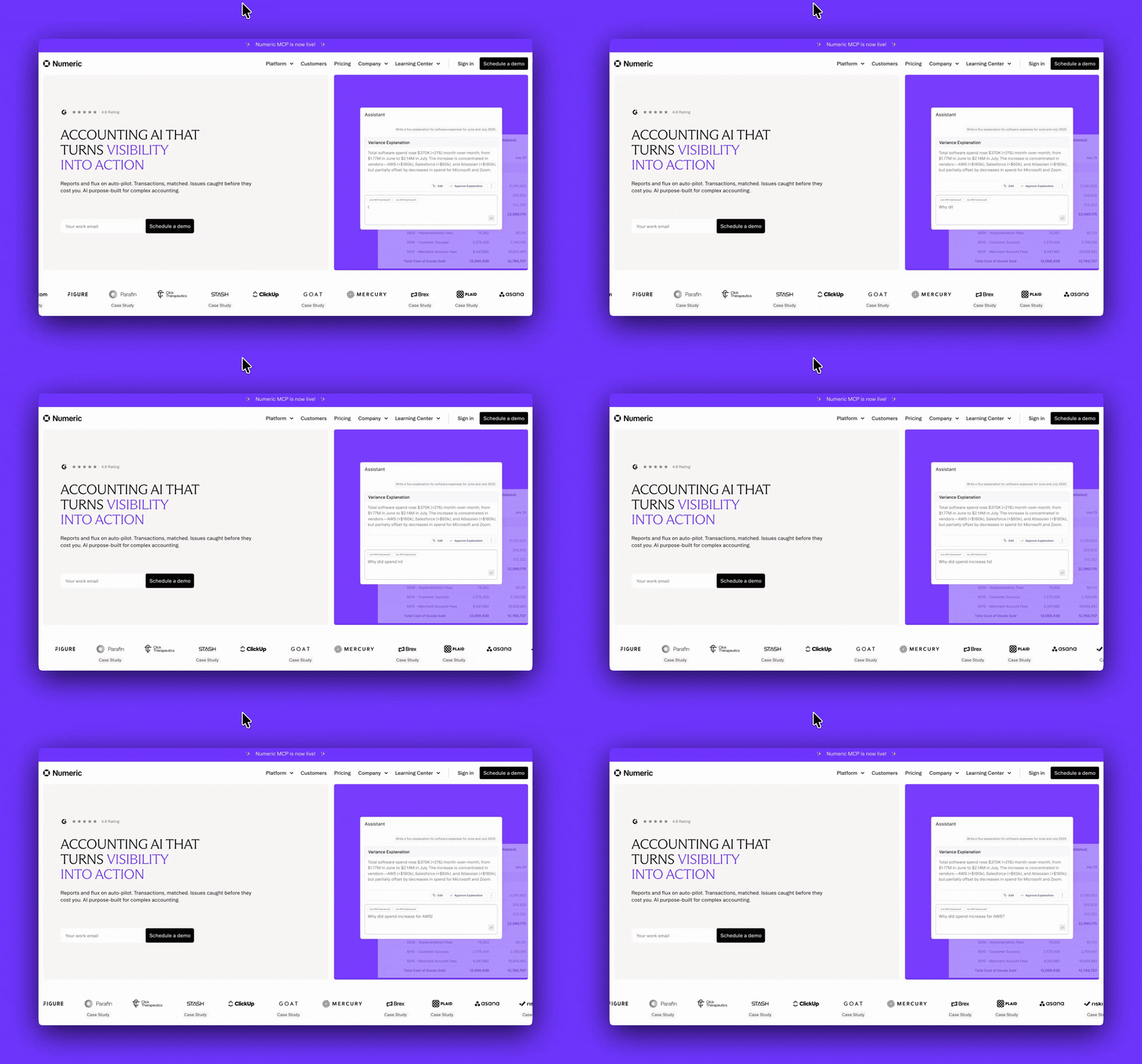
Numeric is an AI close automation platform that helps teams organize the close, reconcile accounts instantly, and turn transaction data into CFO-ready reports. It pulls account totals from workpapers and your GL's trial balance, and its deep ERP integration lets you click straight into the underlying transactions to investigate a discrepancy in real time.
Where AI comes in
Numeric's AI flux writer takes the first pass at variance commentary, combing through every transaction in your ERP — plus your data warehouse, if you've got one connected — to surface the real drivers of change, so teams that used to lose days to reporting get that time back.
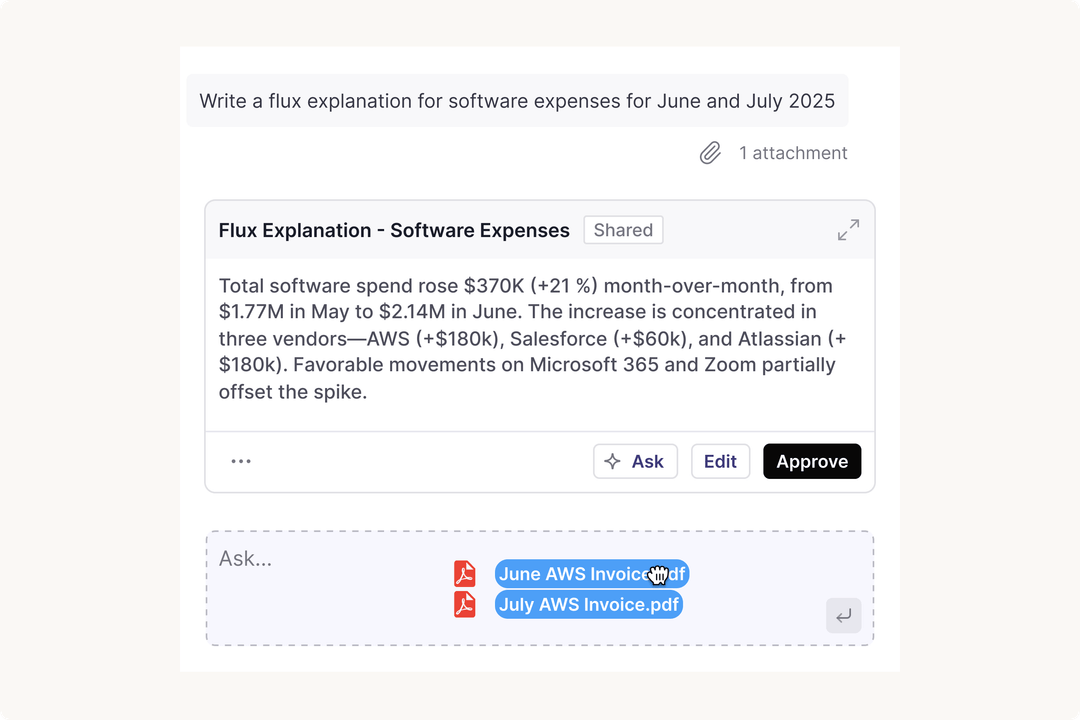
Numeric Intelligence goes a layer further, analyzing your close itself to spot bottlenecks and rebalance workload.
Numeric's reconciliations pull your trial balance and every underlying transaction in real time, so when an account doesn't tie out, you can pinpoint the exact transaction driving the difference instead of hunting through exports.
The technical accounting AI bot, trained on GAAP guidance and public filings, answers questions across US GAAP, IFRS, and UK GAAP, and provides guidance from any Big Four audit firm.
On the cash side, Numeric's Cash Management automates more than 90 percent of bank reconciliations and batch-posts journal entries with AI-drafted rules— Brex uses it to automate more than 95 percent of its cash reconciliations.
Numeric's MCP lets you trigger close workflows and surface data from the AI tools your team already uses, with 17 pre-built skills — like auto-drafting flux or scanning for department miscodes — ready to install in minutes.
Best for: High-growth accounting teams on NetSuite that want to compress the close, automate flux and reconciliations, and put AI to work on the process itself.
ChatGPT: General-Purpose AI Assistants

What it is
ChatGPT remains the most widely used AI assistant by a wide margin — effectively a household name and a go-to for quick text, calculations, and summaries.
Where AI comes in
It's a capable generalist for drafting emails and memos, running fast calculations, and summarizing long-form text. For accounting specifically, it can help draft journal entries, write first-pass policies, extract data, and clean up spreadsheets. For the prompts and patterns that work best, see our guide on getting the most out of ChatGPT as an accountant.
Best for: Everyday drafting, summarizing, and ad hoc analysis that doesn't touch your ledger directly.
Claude: Enterprise AI Assistants
What it is
Claude, from Anthropic, is the other general-purpose assistant worth keeping open in a tab — and one that enterprise accounting teams increasingly reach for.
Where AI comes in
Claude handles the same general tasks as other assistants but is widely regarded as a stronger, more natural writer.
This makes it a good fit when tone and clarity matter — board narratives, policy memos, or client-facing explanations. It's also extensible: teams have started building reusable accounting workflows with it, and you can browse Numeric's own Claude Skills Library for accounting-specific examples.
Best for: Writing-heavy tasks where voice and nuance matter, and teams experimenting with custom AI workflows.
BILL: AI for Accounts Payable and Spend Management

What it is
BILL handles accounts payable and accounts receivable in one place and is a popular AP choice across company sizes, with smooth onboarding for domestic and international suppliers.
Where AI comes in
BILL's AI automates invoice data entry — auto-extracting and auto-entering invoice details — to cut manual keying and reduce errors, so invoices are captured and documented accurately with far less hands-on work.
Best for: Teams looking to eliminate manual data entry in accounts payable.
Numeric – the #1 automation platform for the close
.png)
Ramp: Well-known Expense Management Platform

What it is
Ramp is a fast-growing spend management platform — corporate cards plus tooling to surface wasted spend, route approvals, and cap spending by category.
Where AI comes in
AI runs underneath Ramp's spend workflows, routing expense requests to the right approvers based on policy and learning from behavior over time to sharpen its suggestions. The result is tighter spend control, better compliance, and less manual review.
Best for: Teams that want automated, policy-aware control over company spend.
Brex: Suite of Financial Services
What it is
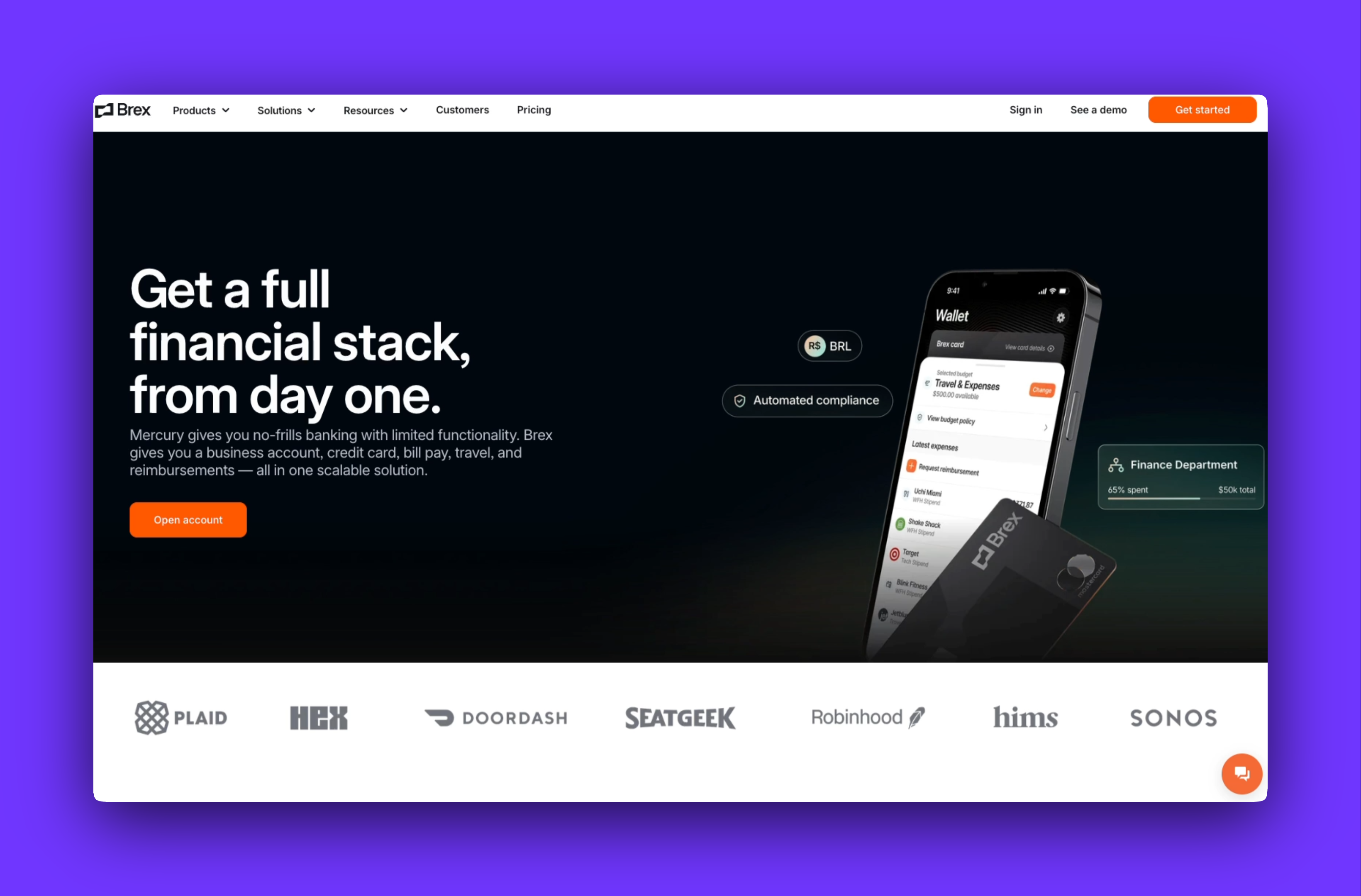
Brex offers a full suite of corporate cards, cash management accounts, and expense tools, and positions itself as an AI-powered spend platform.
Where AI comes in
Brex's AI suggests GL coding and merchant mapping through its integrations with major ERPs, and lets teams embed company policies so controls are enforced across cards, reimbursements, travel, and invoices without manual policing.
Best for: Teams that want spend management with AI-assisted coding and built-in policy enforcement.
Vic.ai: AI for Autonomous Accounts Payable
What it is
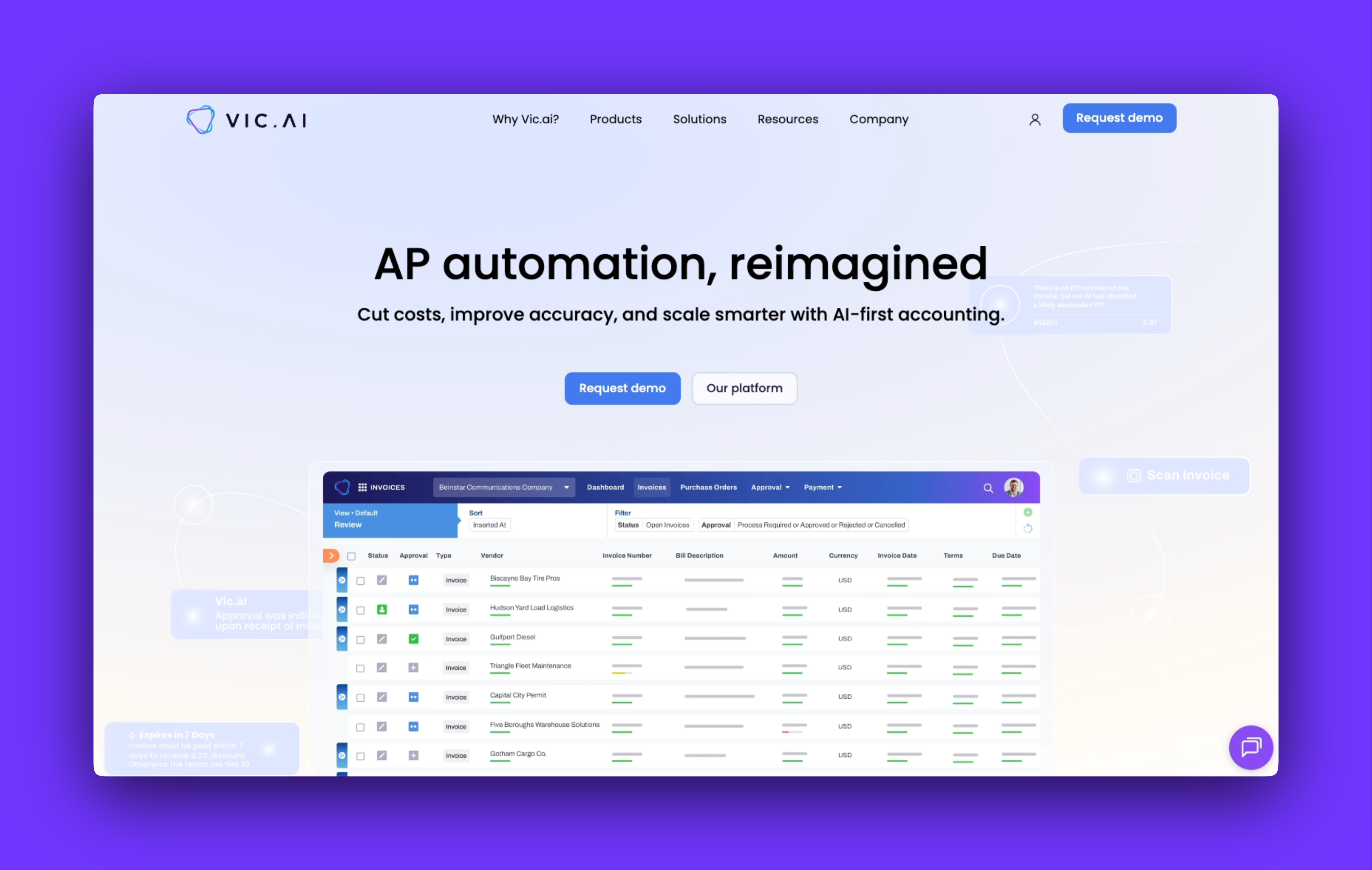
Vic.ai is an autonomous AP automation platform. Its AI is trained on over a billion invoices, and it goes beyond data capture: it makes GL coding and approval decisions a human would, then routes invoices straight through to payment when it's confident enough.
Where AI comes in
Vic.ai's Autopilot extracts header- and line-item data, assigns GL codes, runs PO matching, and routes approvals, learning from every correction to get more autonomous over time.
It integrates natively with NetSuite, SAP, Microsoft Dynamics, and other major ERPs, with two-way sync that avoids duplicate postings. Teams running high invoice volumes report touch-free processing rates in the 80–90+ percent range once the AI has learned their vendor and coding patterns.
Best for: AP teams on NetSuite or similar ERPs processing roughly 1,000+ invoices a month.
Tabs: AI for Revenue Recognition
What it is
Tabs is an AI-powered revenue automation platform built for SaaS and B2B companies with complex, contract-driven revenue.
Where AI comes in
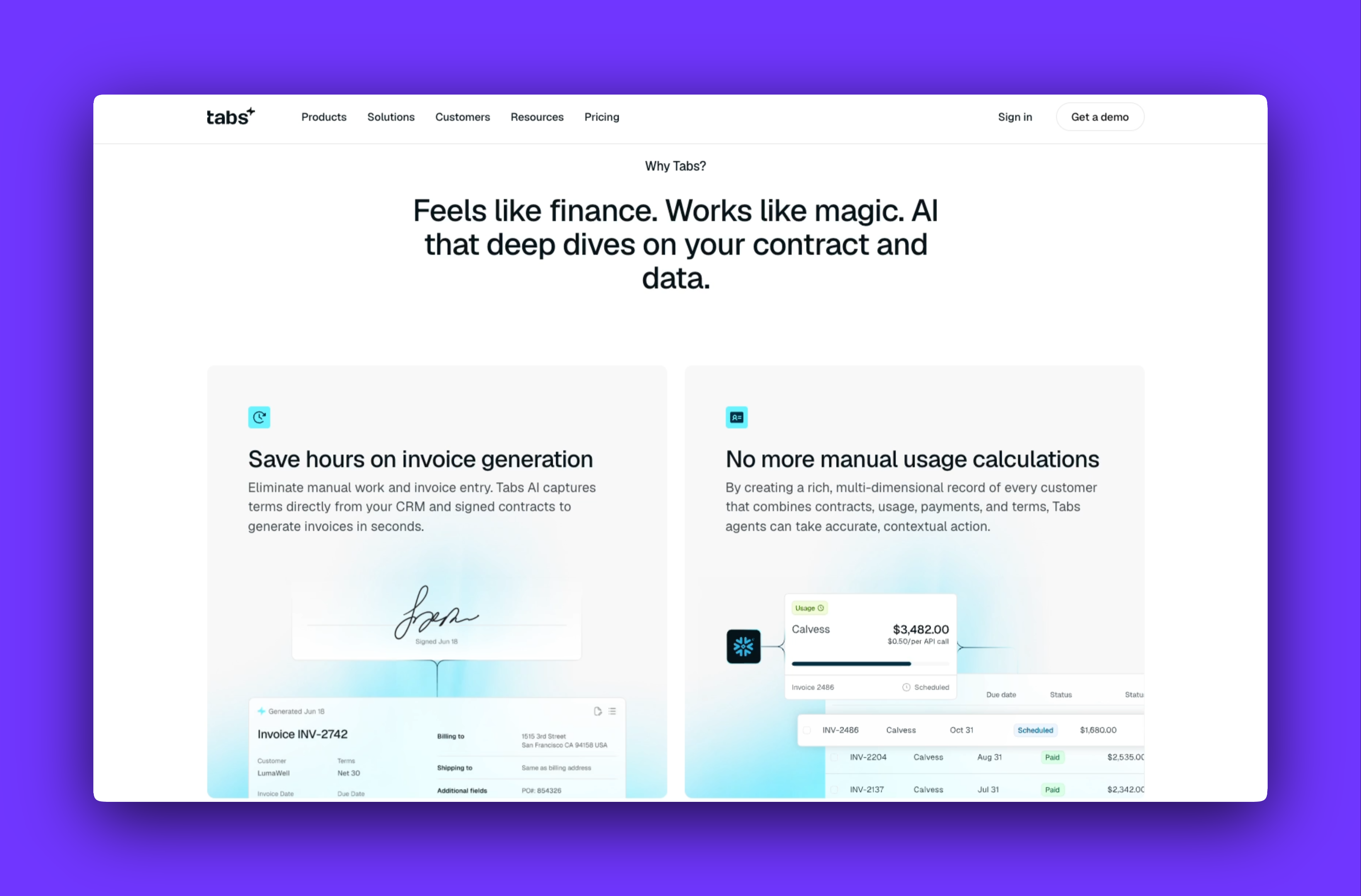
Tabs sits downstream of your CRM and CPQ and ingests signed contracts — PDFs, Word documents, and attached order forms. It extracts terms that carry accounting impact: pricing structure, performance obligations, and modification language such as upgrades, downgrades, and renewals.
It also classifies that language and maps it to ASC 606-compliant revenue recognition schedules, flagging non-standard clauses that could change the accounting conclusion.
Tabs supports subscription, usage-based, and hybrid pricing models natively, and syncs schedules and journal entries into ERPs like NetSuite, with an audit trail tied back to the source contract.
Best for: SaaS finance teams whose contract complexity has outgrown spreadsheet-based revenue recognition and need ASC 606 schedules generated automatically, with audit-ready traceability built in.
Trullion: AI-powered Accounting Platform

What it is
Trullion is an AI-powered accounting platform centered on lease accounting, revenue recognition, and audit. It is built to turn unstructured source documents into structured, auditable records.
Where AI comes in
Trullion's AI extracts key data from contracts and PDFs, validates it against source documents and prior periods, and generates the entries and disclosures needed for ASC 842, IFRS 16, and ASC 606 compliance. It integrates with systems like NetSuite, and its design leans hard on explainability and an audit trail tied back to source.
Best for: Teams managing complex lease or revenue recognition workloads that need audit-ready output.
Anrok: AI for Sales Tax Compliance
What it is
Anrok is an AI-native global sales tax and VAT/GST compliance platform built for software and SaaS companies.
Where AI comes in
Anrok monitors physical and economic nexus in real time across more than 11,000 US jurisdictions — down to home-rule cities — and 100+ countries. From there, it carries you through the rest of the lifecycle: tax calculation on every invoice, sales order, and credit memo, registration when you cross a new threshold, filing and remittance, and reconciliation back to your books.
Its native NetSuite integration runs through SuiteTax, so tax is calculated and applied directly inside NetSuite transactions without custom code, and setup typically takes under 30 minutes with no ongoing tax configuration work inside NetSuite itself.
Best for: SaaS and software companies that need sales tax compliance handled end-to-end — from spotting new nexus exposure to actually registering and filing there — without building out an in-house tax function.
AI Accounting Tools at a Glance
| Tool | Best for | AI capability | ERP / integrations | Best-fit team |
|---|---|---|---|---|
Numeric |
Month-end close, reconciliation, flux, reporting | Close optimization, flux drafting, technical accounting bot, cash matching | NetSuite, Xero, QuickBooks, Sage Intacct | In-house close teams at high-growth companies |
ChatGPT |
General drafting and analysis | General-purpose generation and summarization | None (standalone) | Any team, for ad hoc work |
Claude |
Writing-heavy and custom workflows | General-purpose generation, strong writing, and extensible skills | None (standalone) | Any team, for ad hoc and custom workflows |
BILL |
Accounts payable/receivable | Invoice data extraction and entry | Major ERPs | Teams automating AP |
Ramp |
Spend management | Policy-aware approval routing, learned insights | Major ERPs | Teams controlling company spend |
Brex |
Spend management | GL coding suggestions, policy auto-enforcement | Major ERPs | Teams wanting AI-assisted spend control |
Vic.ai |
High-volume autonomous AP | Autonomous invoice coding, PO matching, and approval routing | NetSuite, SAP, Microsoft Dynamics, and other major ERPs | High-volume AP teams (1,000+ invoices/month) |
Tabs |
Revenue recognition | Contract ingestion, clause classification, ASC 606 schedule generation | NetSuite, QuickBooks, Sage Intacct | SaaS finance teams with complex contract revenue |
Trullion |
Lease accounting, rev rec, audit | Document extraction, validation, disclosure generation | NetSuite, Salesforce | Teams with complex lease/rev rec workloads |
Anrok |
Global sales tax compliance | Nexus monitoring, calculation, registration, filing, reconciliation | NetSuite (via SuiteTax), and 30+ billing/HR integrations | SaaS and software companies managing multi-state or global tax exposure |
How to Choose the Right AI Tool for Your Close
The fastest way to pick is to start with your biggest bottleneck:
- If reconciliations and the close are the bottleneck, look at close-and-reconciliation platforms that pull your trial balance and let you drill to the transaction driving a difference.
- If flux and reporting eat your month-end, prioritize tools that draft variance commentary and reporting narratives from the underlying data.
- If accounts payable and spend are the drag, an AP or spend platform that captures invoices and enforces policy will free up the most hours.
- If revenue recognition is the choke point, a contract-aware platform that turns signed agreements directly into compliant schedules will move the needle more than a generic document extractor.
- If sales tax exposure is the open question, a platform that monitors nexus continuously and handles registration and filing closes the loop instead of creating another thing to track manually.
- If you mostly need a flexible drafting and analysis partner, a general-purpose assistant is the cheapest place to start.
Paddle cut their close from 20+ days to 9. See what Numeric does for yours.
Tools Don't Make the Teams — The Teams Make the Tools
A tool only delivers if the team around it is ready. Before you add anything to the stack, get clear on three questions: which gap or silo the tool actually fills, who will own its setup and training, and how it fits the systems you already run. Our full breakdown on building the accounting tech stack walks through each.
New software runs only as well as the team behind it. Clear expectations for what the tool should produce, aligned owners, and solid systems architecture are what turn a purchase into real time back on the calendar. And if leadership has handed you an AI mandate, our AI Mandate Playbook lays out how to meet it without buying tools you won't use.
Start Where AI Pays Off Fastest
If the close is where your team loses its nights and weekends, that's the place AI earns its keep first. See how lean teams run an AI-native month-end on Numeric, with the recs, flux, and reporting drafted for them instead of by them.
Schedule a walkthrough, and we'll show you what it looks like on your close.
Frequently Asked Questions
For teams focused on compressing the close, a dedicated close automation platform — one that handles reconciliations, flux, and reporting in a single ERP-integrated system — will do more than a general-purpose assistant. The right choice depends on where your close slows down.
Yes, with the right controls. Look for tools that keep outputs transparent, editable, and traceable to source, with a clear audit trail — so anything AI drafts can be reviewed and verified before it posts or ships.
Start with the highest-volume, most repetitive work that consumes the most manual effort — typically reconciliations, transaction coding, document extraction, and flux commentary. Automating those first tasks tends to return the most time the fastest.
Related Content
.png)
Expense Allocation in Accounting: From Shared Costs to True Margins (and Why the Usual Methods Break)
Learn what expense allocation involves, why it's essential for fully loaded P&Ls and true margins, and why spreadsheet models and aggregate JEs keep failing, plus how to fix the root cause.
.png)
Multi-Entity Consolidation: What It Involves, Why It Breaks, and How to Fix It
Learn what multi-entity consolidation involves, why it breaks as companies grow, and why both Excel and add-on tools share a structural flaw. A guide for controllers and VPs of finance.
.png)
How to Build an AI Audit Trail for Your Accounting Workflows
A practical guide to AI audit trails for accounting: what to capture, why SOX, PCAOB, and GAAS require traceability, and how to audit AI agents and skills, not just AI features bolted onto your close software.